Future Leaders in Applied & Basic Research
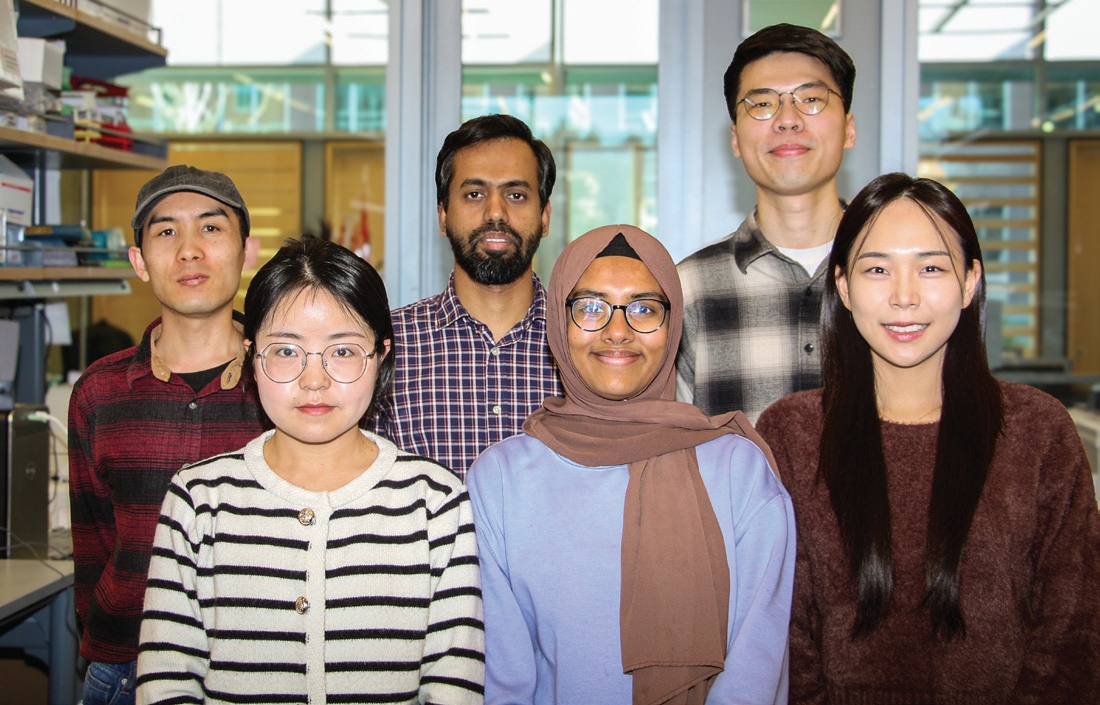
Dr. Min Du’s lab group is studying how obesity in pregnant women can affect the long-term metabolic health and development of their babies. They are using mouse models to understand these effects on the brain, muscles, bones, fat tissue, and red blood cells. Md Nazmul Hossain, a PhD candidate from Magura, Bangladesh, is researching how obesity during pregnancy affects the development of embryos by examining the cells at different stages. Le-Wei Chen, a PhD student from Taipei, Taiwan, is investigating how obesity causes inflammation in the fetus’s brain, which can interfere with normal brain development. Sharmeen Islam, a PhD student from Mymensingh, Bangladesh, is looking into the molecular reasons why obesity can lead to muscle problems in babies. Zhongyun Kou, a PhD student from Yunnan, China, is studying how obesity in mothers affects the formation of red blood cells in the fetus using advanced techniques to analyze early-stage blood cells. Xinrui Li, a PhD student from Shangxi, China, is researching how fat cells develop and accumulate fat, focusing on how a specific regulator called H19 affects this process. Chaeyoung Shin, a PhD student from South Korea, is examining how exercise can help prevent and manage polycystic ovary syndrome (PCOS).
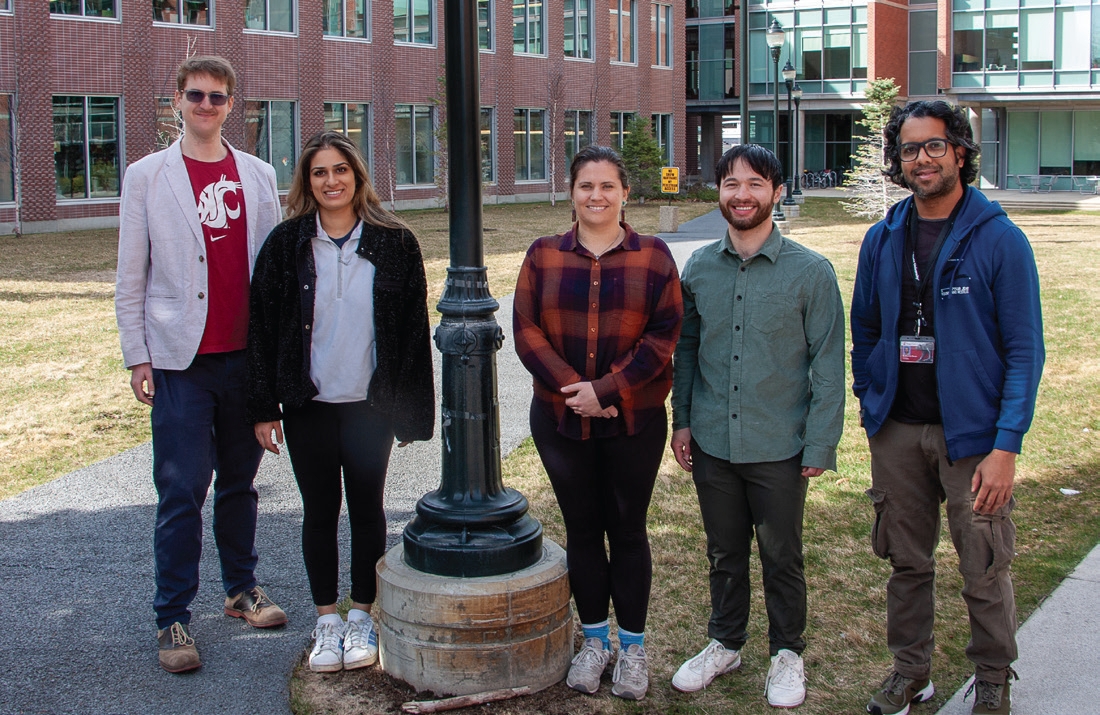
Dr. Mike Phelps’ team is a diverse group of researchers dedicated to various aspects of fish conservation and physiology. Tad Iritani, an MS student from Seattle, is focused on conserving Pacific Salmon, driven by his lifelong passion for fishing. Shubhankar Sicar, a virologist from Bareilly, India, joined the lab in June 2022. He has a PhD from Amity University, Noida, India, and is involved in advanced molecular research investigating infectious diseases and fish reproductive physiology. Max Butensky, a PhD candidate from Los Altos, California, is studying the causes of salmon death after spawning, with a particular focus on steroid hormones and their role in gene expression. Sabrina Haney, a PhD candidate from Ogden, Utah, is researching the drivers of speciation in sharks and the role of epigenetics in differential behaviors and reproductive modes. Chaya Gaberria, an MS student from Mukilteo, Washington, studies the biological and physiological mechanisms behind fish respiration and oxygen use, aiming to improve the tolerance of fish to oxygen depletion in aquatic environments.
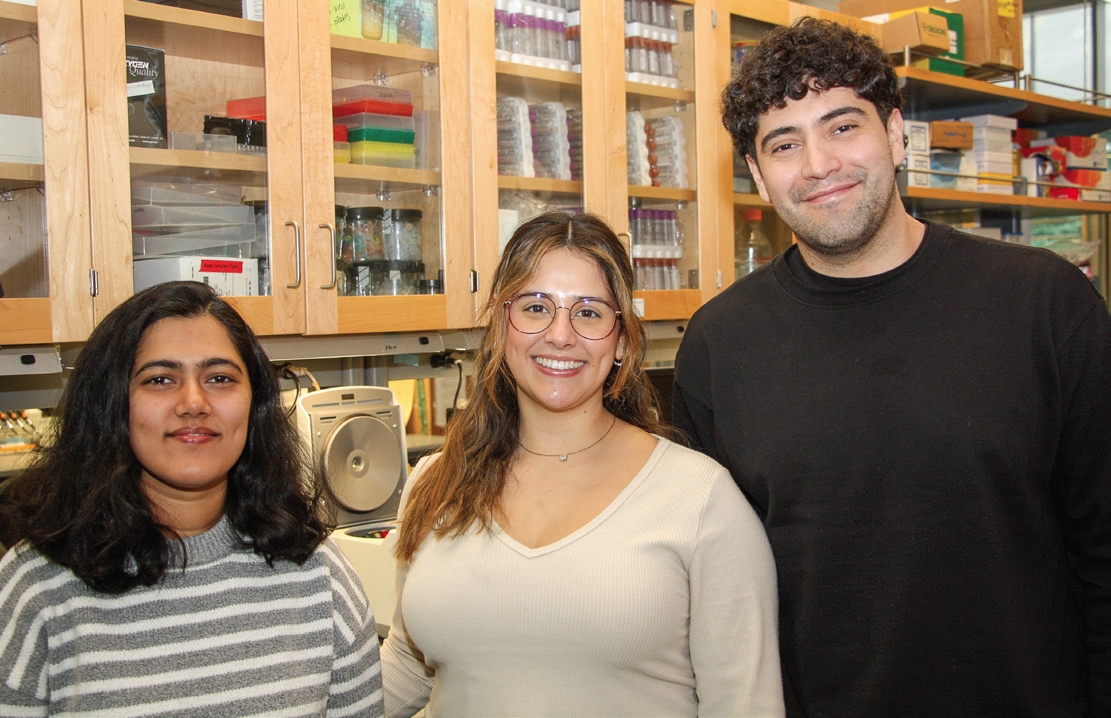
cows. (L to R): Priunka Bhowmik, Adriana Zaragoza, Francisco Martinez
Priunka Bhowmik, a PhD student from Dhaka, Bangladesh in Dr. Zhihua Jiang’s lab, together with Adriana Zaragoza, an MS student from Los Angeles, California, and Francisco Martinez, a PhD student from Mexico City, Mexico, both in Dr. Martin Maquivar’s lab, are examining how endometritis and metritis affect fertility, culling rates, and economic profitability in organic dairy farms. Their research will explore the impact of environmental factors, such as animal management, nutrition, and physiological states, alongside genetic variation on reproductive traits. The findings from this study are expected to provide valuable insights for future genomic research, aiding in the development of strategies to mitigate reproductive disorders and improve fertility in both organic and conventional dairy farms.
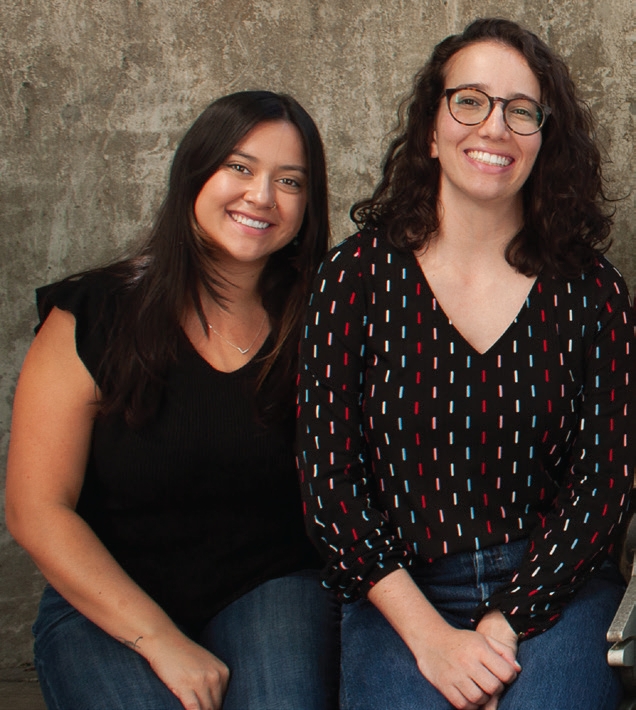
Graduate students in Dr. Marcos Marcondes’ lab group are investigating the use of naturally occurring feed additives to reduce enteric methane production from dairy cows. Valerie Achziger, an MS student from Eastvale, California, is researching the effect of zeolite, a naturally occurring mineral made of microporous aluminosilicates, on methane production in a simulated rumen fermentation system. Isabela Carrari, a PhD student from Curtitiba, Parana, Brazil, is studying the effects of feeding seaweed (Asparagopsis taxiformis) on digestion, performance, and enteric methane emissions in dairy cows.
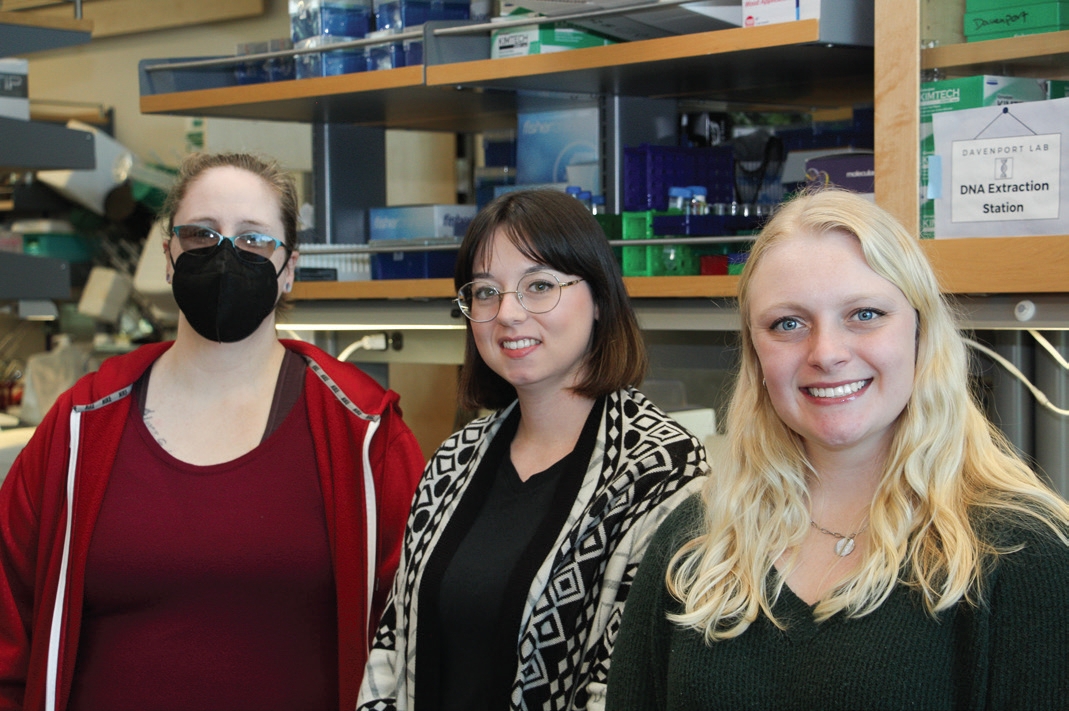
Allison Herrick, a PhD candidate in Dr. Holly Neibergs’ lab from Bliss, New York, is focused on traits in beef and dairy cattle that are economically significant, specifically reproductive traits in Wagyu cattle to ensure a productive population that meets market demands for beef. She also investigates respiratory disease traits and genomic selection tools to help producers maintain healthier herds, boost profitability, and reduce the need for antibiotics. Morgan Wagle and Ashley Destin are both MS students in Dr. Kim Davenport’s lab. Wagle, from Edgerton, Missouri, is studying how parental bias and placental gene expression contribute to placental development and pregnancy loss in cattle. Destin, from Spokane, Washington, is researching DNA methylation and RNA gene expression in placental tissues to understand the disparity between fertilization and pregnancy rates in cattle.
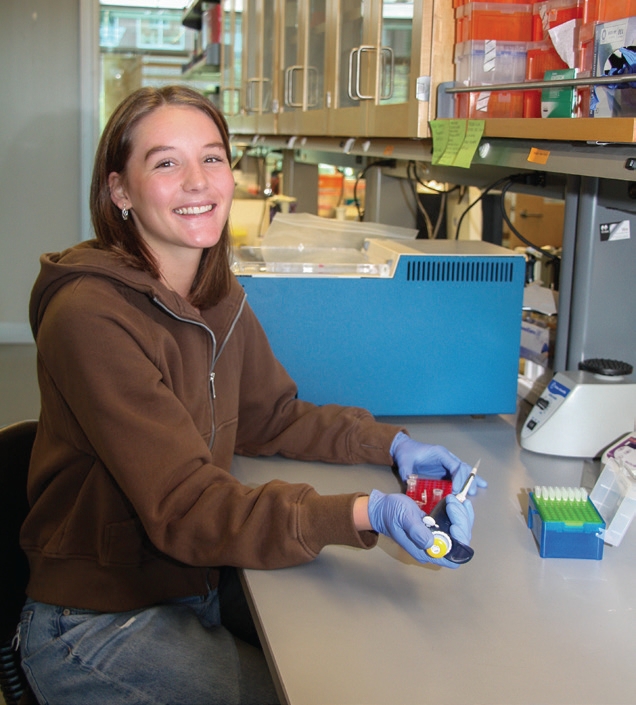
Michee Van Rooyen, an MS student from South Africa working in Dr. Zhihua Jiang’s laboratory, is developing a pan-transcriptome for sheep. A pan-transcriptome integrates the transcriptome, which is the complete set of RNA molecules in an organism, with the pan-genome, which encompasses the total set of genes within a species. This resource can be utilized to investigate the relationship between an animal’s genetic composition (genome) and its observable physical characteristics (phenome), thereby aiding in the understanding of species/sub-species divergence, sexual dimorphism, and disease resistance.