A Comparative Animal Nutritionist’s Journey
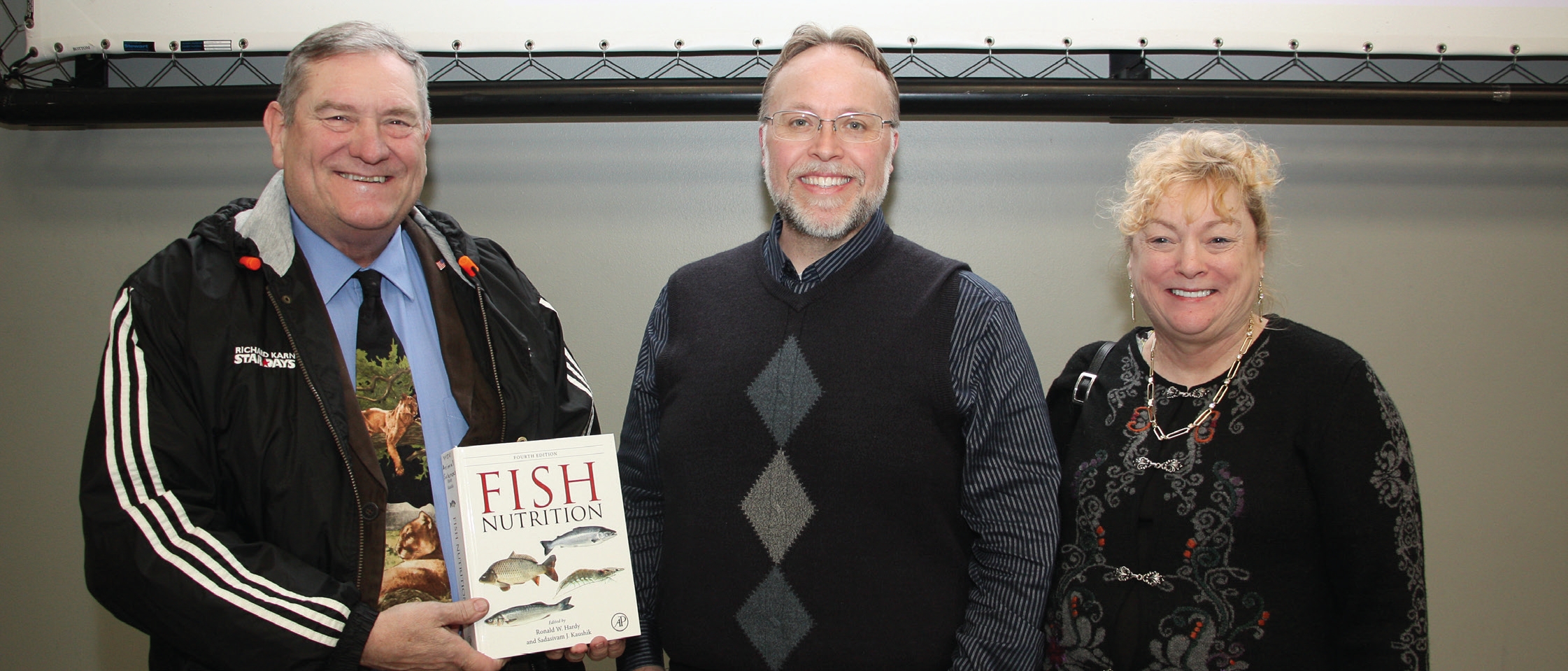
The 2025 Halver Lecture in Comparative Nutrition, funded by Dr. John E. Halver III’s family, was delivered by Dr. Matthew Brooks on February 25 to students, staff, faculty, and Halver’s children, Peter and Deborah. Dr. Halver, a chemistry graduate of Washington State College in 1944, is known as the “Father of Fish Nutrition” and was dedicated to promoting comparative nutrition to undergraduates.
“We stand on the shoulders of giants like Dr. Halver,” Brooks said at the beginning of this presentation. “His contributions have laid the foundation for our advancements in comparative animal nutrition today.”
Nutrition for exotic animals is less advanced compared to domestic animals. Though fundamental principles are similar, species differ greatly in requirements, digestion, and metabolism. Comparative nutrition addresses these differences by considering an exotic animal’s natural food selection, seeking behaviors, and sometimes unique digestive anatomy that requires strategies to create diets that support their welfare outside their natural habitats.
Brooks’ lecture, “You Never Know Where the Road Will Take You When You Learn to Feed a Zoo,” outlined his transformation from aspiring zoo veterinarian to comparative animal nutritionist, sharing notable experiences along the way.
His interest in exotic animals began as a child after visiting a zoo in South Carolina, inspiring him to become a zoo veterinarian. He started his education at Clemson University, then transferred to Cornell University, where he was introduced to exotic animal nutrition. Hearing about his passion for rhinos, Brooks’ professor arranged an internship at the Fort Worth Zoo.
During his internship, Brooks worked in the nutrition lab, studying if tannin-rich feeds could alleviate iron overload syndrome (IOS) in black rhinoceroses. IOS, which leads to organ damage due to iron accumulation, is relatively common in rhinos kept in zoos.
“I spent a lot of time looking at what went in and what came out of the rhinos,” Brooks said. “I ground up a lot of rhino poop!”
After his internship, Brooks decided against veterinary school, opting for a career in exotic animal nutrition. He graduated with a BS in animal science from Cornell University in 2003 and worked in the Fort Worth Zoo’s nutrition services department. Seeking further growth, he earned an MS in nutrition from Texas A&M University in 2007 and a PhD in ruminant nutrition from the University of Missouri in 2010.
In 2012, Brooks was appointed as the nutritionist at the Oregon Zoo in Portland where he enhanced the nutritional welfare of all the zoo’s animals by applying a comparative approach informed by his post-graduate education in animal science. Among his contributions, he investigated the effects of incorporating tannin-rich grape pomace into the diets of rhinoceroses. He also employed ensiling techniques to preserve feed for winter consumption. His collaboration with Dr. Troy Tollefson at Mazuri Feeds, a WSU alumnus and a former Halver lecture invited speaker, led to the development and testing of experimental diets for polar bears. Additionally, he promoted carcass feeding for both nutritional and behavioral enrichment in many animal exhibits, receiving significant approval from visitors.
In 2019, Brooks assumed the position of Director of Nutritional Services at the Indianapolis Zoo, where he addressed various nutritional challenges for the animals. For instance, Joy, a sea lion who exhibited bulimia due to stress when integrated into a group, benefited from the collaborative efforts of veterinarians who prescribed appropriate medication for her anxiety and Brooks who formulated a diet, which enabled her to regain normal weight. Similarly, Sue, a chimpanzee previously living on fast food as an illegal pet, presented with obesity and type 2 diabetes. Following her confiscation, Brooks dedicated over three months to acclimating her to a proper chimpanzee diet, thereby improving her health. He also collaborated with the zoo’s veterinary team to diagnose and treat a mysterious illness in an Asian pheasant. After the vets identified and surgically removed an eroded penny from the bird’s digestive tract, Brooks concluded it had zinc poisoning.
The COVID-19 pandemic precipitated another shift in Brooks’ career. After being let go from his role at the zoo, he established his own comparative animal nutrition consulting company and currently serves as the small animal nutritionist for Nom Nom, a U.S.-based fresh pet food company. Furthermore, Brooks is the president elect of the Comparative Nutrition Society.
Reflecting on his career, Brooks remarked, “The journey to becoming a comparative nutritionist has been an intriguing one. It is essential to continuously move forward, adapt, and develop problem-solving skills.”