Photo credit: Nancy Irlbeck
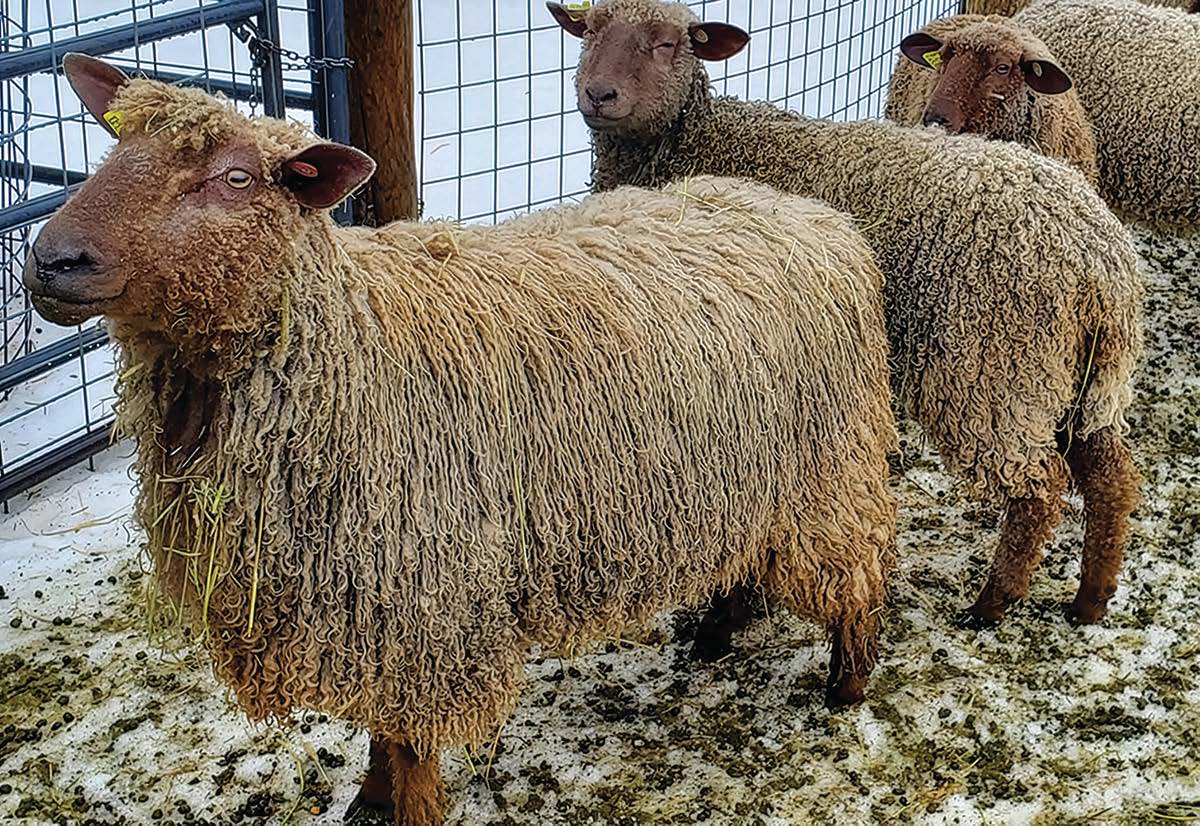
In a genetics laboratory, undergraduate researchers are examining a key question in the genetics of heritage livestock. They are investigating what genetic factors underlie the rare moorit (brown) wool color and the recently observed blue-gray variation, known as ‘muddy moorit,’ in Wensleydale sheep.
Meet the team
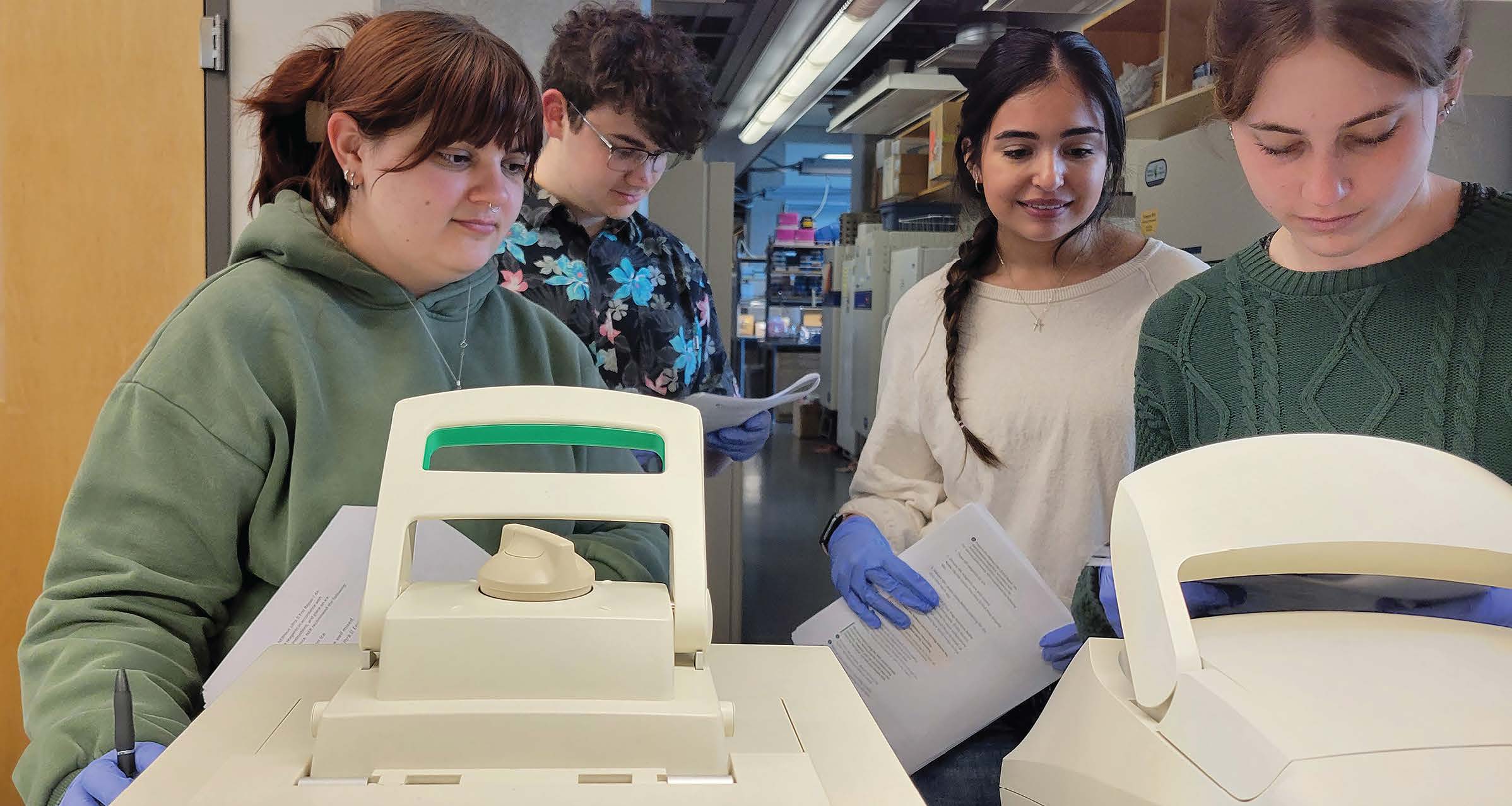
Dr. Kim Davenport leads a team of undergraduate animal sciences students: Jocelyn Brown, Avery Lyons, Chad Knox, Anais Atilano, Kimberly Zapata, and Elisa Macbean. Together, they quickly formed a cohesive group focused on investigating the genetics of heritage livestock.
The power of mentorship
Davenport emphasizes the value of mentorship: “Mentoring undergraduate students is one of the most rewarding parts of my job. Watching their curiosity for science grow into new discoveries and confidence is very fulfilling, and we get to ask some pretty fascinating scientific questions along the way!”
Investigating heritage livestock genetics
The moorit color is highly valued in heritage fiber markets. For decades, it was believed lost in Wensleydale sheep until it reappeared in an Idaho flock. Following this rediscovery, as breeders selected for moorit, the wool of some Wensleydale sheep began to show a darker, blue-gray cast called muddy moorit. This observation suggests that multiple genetic changes may be involved. According to one student, muddy moorit is “not like a true moorit, but it’s showing some variation of it,” with a “bluish, gray, brownish phenotype.”
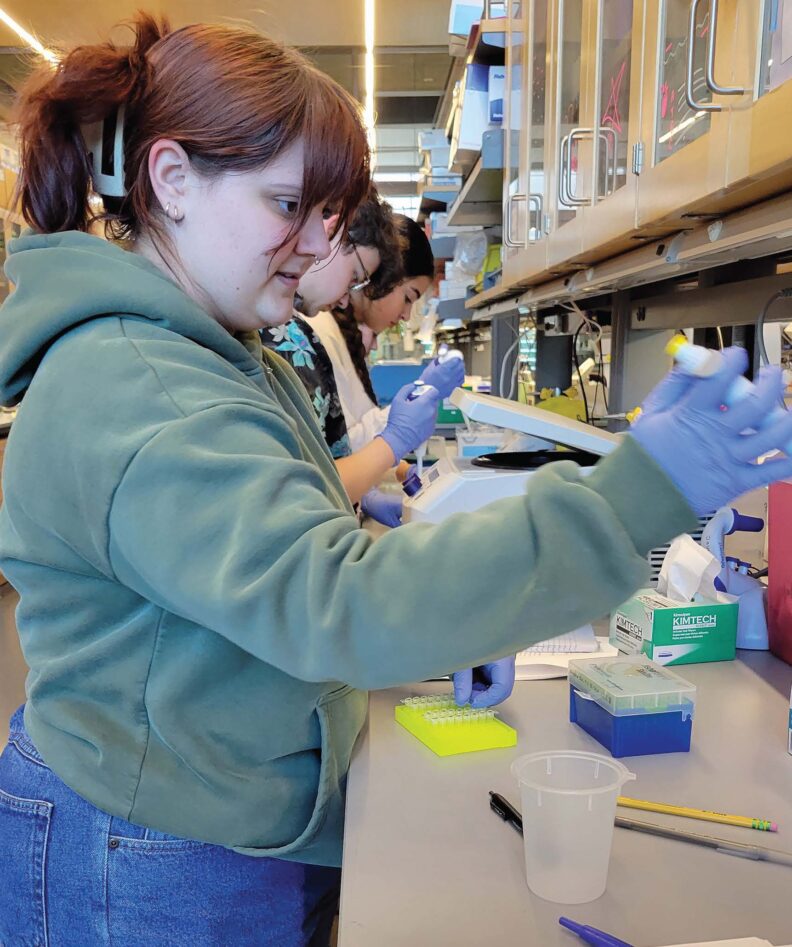
The research team is focusing on TYRP1 (tyrosinase-related protein 1), a gene that influences coat color in sheep. Mutations in the gene responsible for black pigment result in the brown (moorit) phenotype. Their primary objective was to sequence the entire TYRP1 gene to confirm the known mutation associated with moorit and to identify additional variants that may explain the muddy moorit phenotype. This process required extensive laboratory work, including DNA extraction, multiple polymerase chain reactions (PCRs), and gel electrophoresis. Subsequently, the team sequenced the DNA using an in-house Oxford Nanopore MinION, a portable DNA sequencer. The resulting DNA reads were then mapped to the sheep reference genome to identify genetic variants.
Student growth and scientific curiosity
While the scientific objectives are clear, the project is equally about building students’ research confidence. “Mostly how to properly work in the lab,” said Chad Knox, who was familiar with the terminology but not the concepts. Learning procedures such as PCR and gel electrophoresis helped clarify these ideas. “That was really helpful for me to actually understand what was happening.”
Support and inspiration have been essential to the students’ progress. All of the students joined Davenport’s lab through the CAHNRS Ignite program and stayed because of the combination of mentorship and intellectual curiosity. Anais Atilano, who wants to go to veterinary school, expressed a desire to understand “what goes on in a lab.” She noted that, “Kim’s positive and supportive attitude was really inviting.” Avery Lyons, who will start vet school in August, initially felt uncertain about research, but after a tour, she felt “very welcome” and “liked the energy” in the lab. Ultimately, she discovered that research was “something that I really like.”
Collaborative discoveries and achievements
Beyond laboratory research, this work may help breeders and breed registries make informed decisions. By supporting genetic diversity, these efforts help conserve at-risk heritage sheep. Jocelyn Brown noted that the muddy moorit phenotype in Wensleydale sheep “hasn’t been seen in a long time.” She added, its reappearance is “really kind of monumental.” As a result, this research may improve the chances of breeding and preserving the trait.
The experience is also broadening students’ perspectives on their roles in science. After attending the Plant and Animal Genome conference in January, Brown described observing researchers sharing ideas and building on each other’s work: “It was really cool and inspiring,” she said. “I was like, yeah… grad school’s for me,” as she decided between veterinary school and graduate school. Lyons agreed that stepping outside the daily routine was valuable: “It was nice to kind of get out of our little… bubble of the lab and realize… there’s so much genetics research going on.”
Their analyses are almost complete, and the students are excited to share what causes the muddy moorit coat color. As the next step, Brown and Lyons will present the group’s findings at the American Society of Animal Science Annual Meeting in Madison, Wisconsin, in July.